
Arthur William Zeckendorf Visits ICC
On 30 November 2025, Arthur William Zeckendorf, a prominent U.S. expert on China and heir to the Zeckendorf family, visited the International Cooperation Center (ICC). He was received by Zhang Zhixiang, Member of the Strategic Advisory Committee of the ICC and Chairman of the International Monetary Research Committee, and Zhang Yu, Convener of the Joint Meeting and Director of the Steering Committee of the ICC. Wang Tianyi, Academician of the International Academy of Astronautics and Executive Chairman of the International Peace (Space) Alliance, was also present at the meeting. Both sides agreed that China-U.S. relations are one of the most important bilateral relationships in the world, bearing on the vital interests of both peoples and the future of humanity. They expressed their commitment to finding the right way for China and the U.S. to interact in the new era, enhancing high-level exchanges and people-to-people friendship, and deepening practical cooperation in all fields. This is aimed at achieving long-term peaceful coexistence between the two countries, contributing to the well-being of both nations and the world at large.
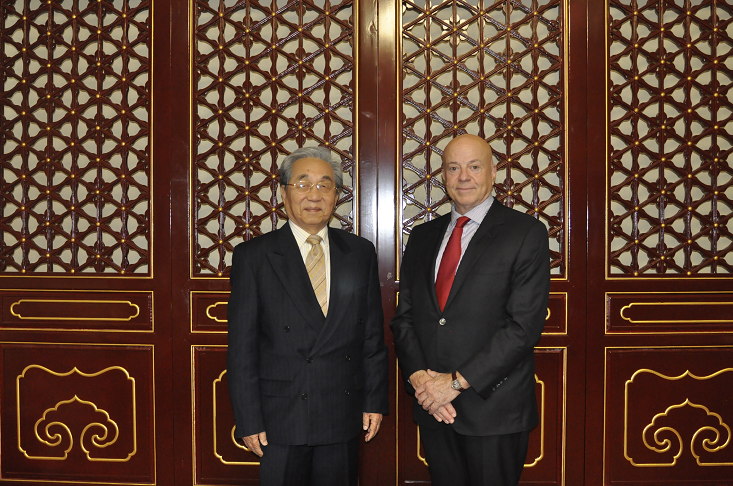
Zhang Zhixiang (Left) and Arthur William Zeckendorf (Right)
William Lie Zeckendorf (Arthur Zeckendorf's grandfather) was a renowned American industrialist whose life story could fill a legendary biography. The Zeckendorf family held significant influence in New York's and international real estate. According to Arthur, in 1945, his grandfather met Dong Biwu, a representative from the Chinese Liberated Areas, who traveled from San Francisco to New York for the UN Charter Conference. In 1948, Ieoh Ming Pei joined Webb & Knapp Real Estate Corp., a company under William Zeckendorf, as head of the architectural research department. That same year, William Zeckendorf collaborated with the Rockefeller family, gaining fame for the innovative land donation to the UN for the construction of its headquarters.
Arthur Zeckendorf's maternal grandfather, Trygve Halvdan Lie, chaired the Third Committee of the UN Conference (San Francisco Conference) starting April 1945, where he engaged in deep discussions with Dong Biwu. Later, as the UN Acting Secretary-General, he oversaw the UN's establishment. During his tenure as the first UN Secretary-General (1946-1952), he led the construction of the UN Headquarters, proposed the "UN Twenty-Year Peace Plan," and sought peaceful coexistence among major powers. After becoming Secretary-General, he exchanged correspondence with Zhou Enlai, then Premier and Foreign Minister of China, and met with Wu Xiuquan (China's ambassador-designate) and Wang Jiaxiang (Chinese Ambassador to the USSR) in New York and Moscow. He actively supported restoring the People's Republic of China's lawful seat in the UN.
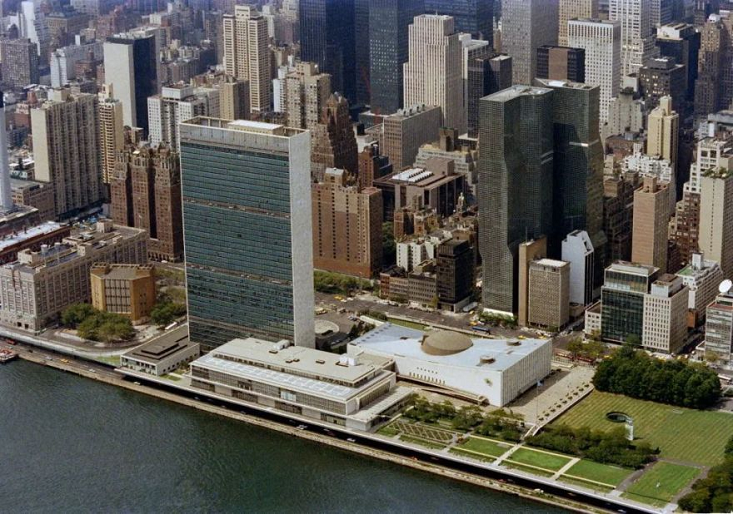
Building of the UN Headquarter
Both sides noted that since the meeting between the Chinese and American leaders in Busan, China-U.S. relations have remained generally stable and positive, which has been widely welcomed by both countries and the international community. Facts have once again demonstrated that "cooperation benefits both sides, while confrontation leads to mutual harm" is a common-sense truth repeatedly verified by practice. The economic, trade, and investment relationship between China and the U.S. is a vital component of bilateral relations. With deeply intertwined interests and vast cooperation potential, the two sides should adhere to the right direction, maintain a healthy stable relationship of mutual achievement and shared prosperity, uphold principles of equality, respect, and mutual benefit, strive for more positive progress to open new prospects for China-U.S. relations. The two sides engaged in in-depth discussions on strategic and long-term issues in bilateral relations, as well as regional and international hotspots of mutual concern, and reached to consensus. They agreed to fully leverage their respective channels and strengths to actively enhance bilateral trust. Both sides also agreed to establish a "Track 1.5" high-level exchange and consultation mechanism to promote high-level interactions and play a significant role in deepening cooperation across all fields.
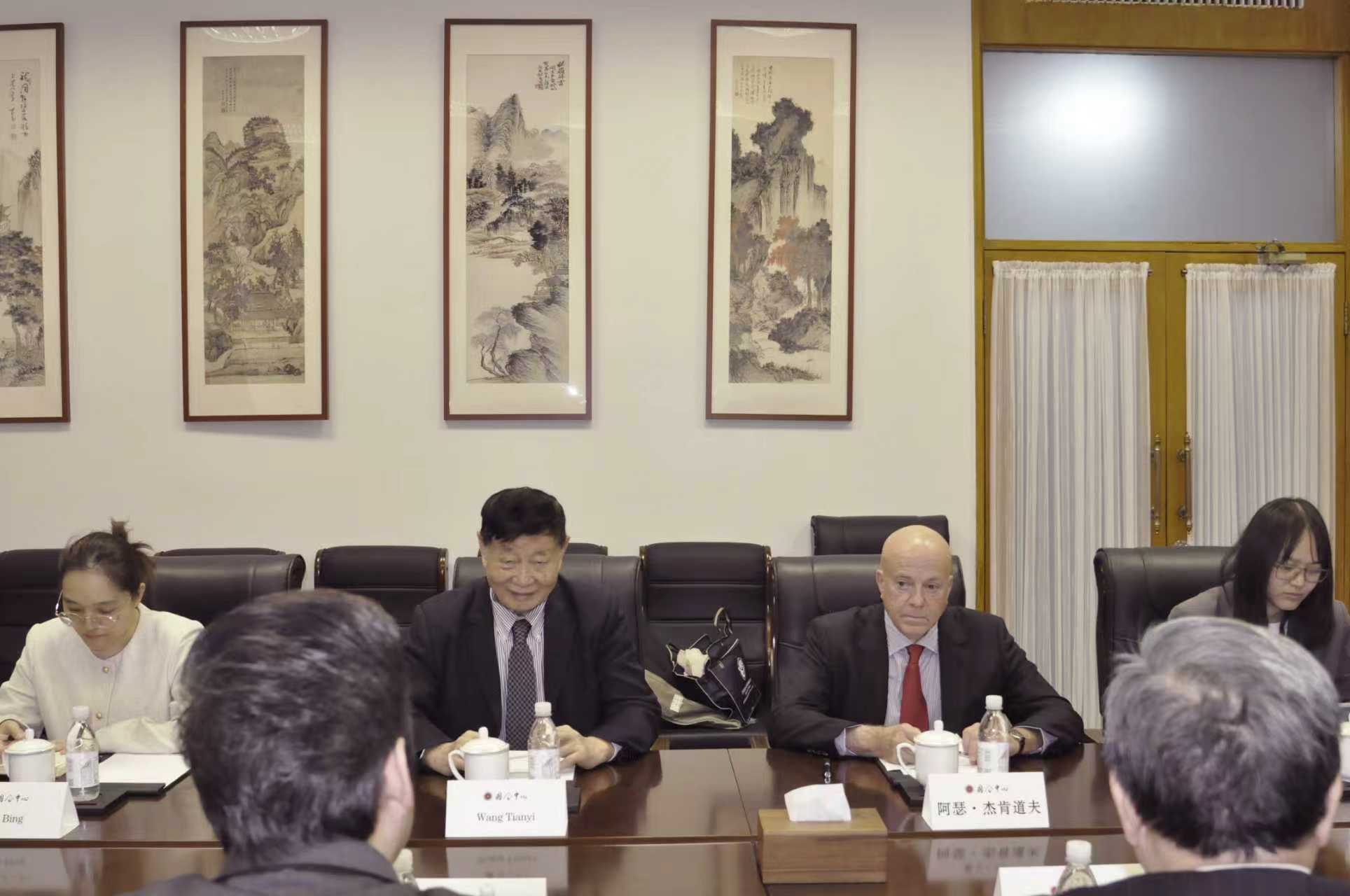
The meeting for discussion
The two sides also discussed other important matters. Prior to the talks, the head of the ICC briefed Arthur Zeckendorf on the ICC's recent efforts in facilitating high-level exchanges between China and the U.S., coordinating multilateral dialogues, and its long-standing communication mechanisms with the United Nations system and the International Monetary Fund (IMF). Arthur toured the ICC's exhibition hall, where he carefully reviewed archival materials and calligraphy-painting works of the first generation leaders of P.R.China, including Dong Biwu, Guo Moruo, and He Xiangning. The sides exchanged views on relevant historical facts. Attending the meeting were: Zhu Hongshan, Economic Affairs Special Representative and Expert Representative of the ICC; Chengyu, Executive Secretary-General of the ICC; Wu Zhonglin, Executive Director of the Development Committee at the ICC; Xin Shaosong, Deputy Director of the Secretariat Office at the ICC; Lin Bing and Wang Yubo from the Secretariat of the International Peace (Space) Alliance.
 国际合作中心版权所有 © 京ICP备2022021348号-2
©2006 - 2026 Copyright International Cooperation Center
网站版权登记号:国作登字-2022-F-10176092
E-mail:info@icc.org.cn