
AUDA-NEPAD and ICC Co-Host UNGA 81 Joint Presidential Roundtable
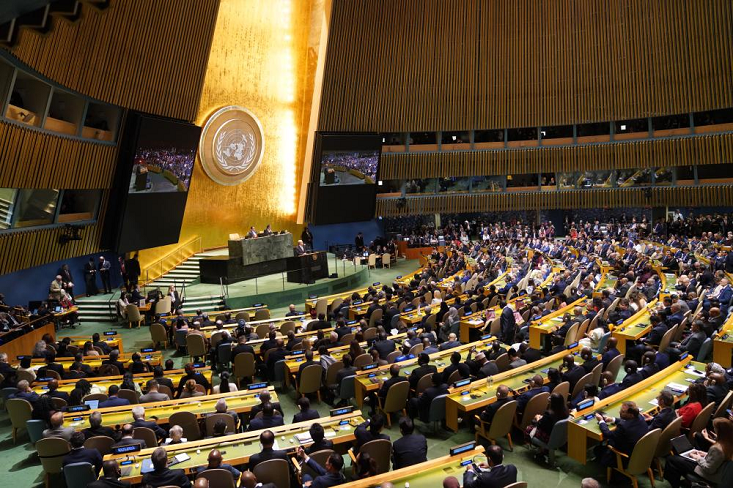
The General Debate of the 81st session of the UN General Assembly opened at UN Headquarters
In the morning of 24 September 2026 (local time), during the High-level Week of the 81st session of the United Nations General Assembly, the African Union Development Agency (AUDA‑NEPAD) and the International Cooperation Center (ICC) co-hosted a Presidential Roundtable on Promoting Education, Skills and Employment through South-South Cooperation. The meeting responds to the universal aspiration of countries of the Global South to explore paths to modernization suited to their national conditions, with education, skills and employment standing as critical themes for advancing this historical process. Over 100 guests gathered at the New York venue, including African leaders attending the UNGA session such as President John Dramani Mahama of Ghana, President William Samoei Ruto of Kenya, President Adama Barrow of Gambia and President Emmerson Dambuazo Mnangagwa of Zimbabwe, senior officials of the African Union, as well as ministers and diplomatic envoys from various countries. Ms. Nardos Bekele-Thomas, Chief Executive Officer of AUDA‑NEPAD, and Prof. Zhou Hong, Chairperson of the Academic Committee of the ICC and Academic Member of the Chinese Academy of Social Sciences (CASS), delivered the opening and closing remarks jointly.
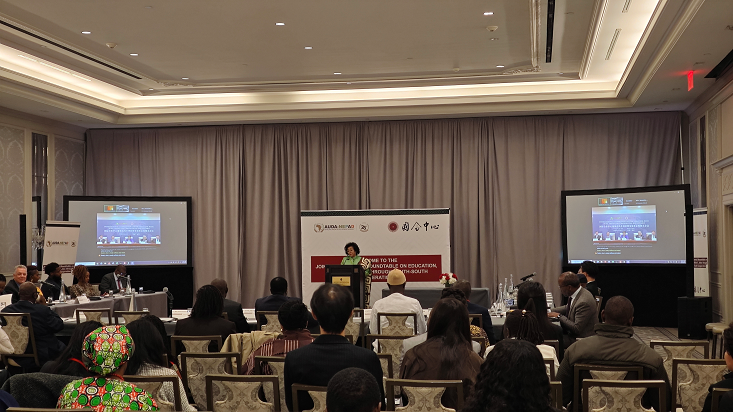
Nardos Bekele-Thomas delivered remarks on behalf of the AUDA-NEPAD at the New York Venue
Zhou Hong stated that under the framework of South-South cooperation, China-Africa development cooperation should be continuously deepened to help Africa fill its skills gap through China-Africa cooperation. It is also imperative to strengthen China-Africa strategic consensus and practical cooperation, and address challenges amid global transformation with a positive development logic. To foster a virtuous cycle of development, she proposed the following safeguards: First, keep sight of the overall picture of China-African Union relations and China-Africa relations to ensure China-Africa cooperation stays on track and delivers tangible outcomes. AUDA-NEPAD and the ICC need to maintain regular dialogue, research and assessment on major bilateral strategic issues. Second, improve the 1.5-track high-level dialogue and consultation mechanism. The value of this mechanism lies in providing both sides with a stable communication channel that transcends rotation cycles and project cycles, leveraging their respective roles in strategic coordination for bilateral high-level exchanges and policy implementation. Third, in advancing the alignment of the Belt and Road Initiative with the objectives of the African Union’s Agenda 2063, the United Nations 2030 Agenda for Sustainable Development and national development strategies of African countries, greater attention should be paid to the linkages between technological advancement, capacity-building of people and industrial upgrading.
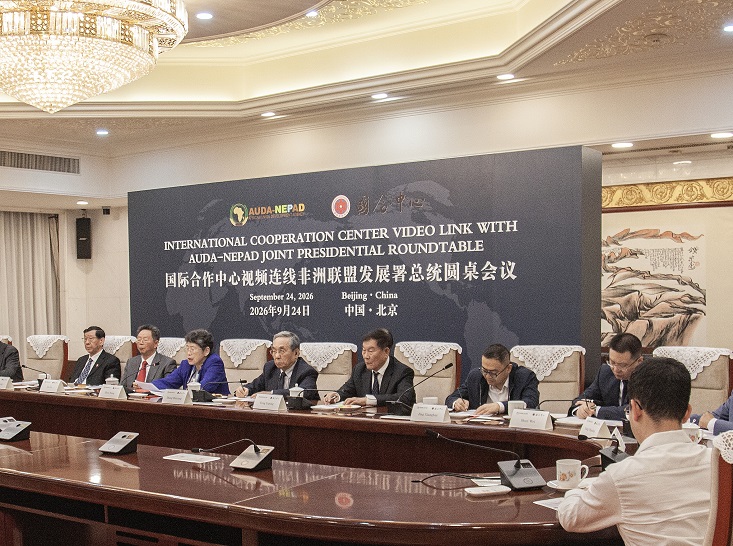
Zhou Hong delivered remarks on behalf of the ICC at the Beijing venue
The ICC attended the Presidential Roundtable via video link from its venue in Beijing. In her remarks, Zhou Hong noted that the themes of the current UN General Assembly session — "Restoring Trust, Managing Transformation: A United Nations that Delivers for All" — reflect that lack of trust, governance deficits and poor implementation of development strategies have become prominent challenges facing the international community. The African continent is currently at a critical stage of regional integration. The construction of the African Continental Free Trade Area (AfCFTA) is gathering momentum, while the second ten-year implementation plan of the African Union’s Agenda 2063 has been fully launched. Positive progress has been made across Africa in governance reform and civic empowerment. African countries generally prioritize industrialization, agricultural modernization and digital transformation in their development agendas. Against the backdrop of a widening global digital divide, the development of a "Digital Global South" is well-timed, precisely responding to the practical needs of Global South countries. Against this backdrop, China-Africa cooperation facilitates mutual learning on development paths, sharing of development capacities and coordination of development agendas, as both sides advance their respective and common modernization endeavors.
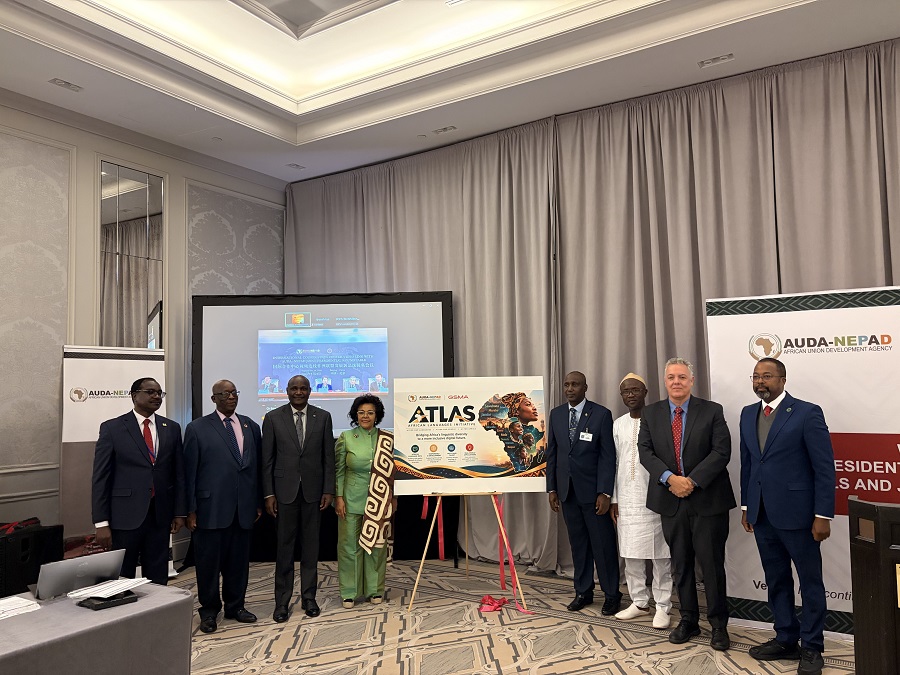
Nardos Bekele-Thomas poses for a group photo with participants of the meeting
Participants held that the collective rise of the Global South stands as a defining feature of the profound changes unfolding across the world. As the world’s largest developing country and the continent home to the largest number of developing countries respectively, China and Africa constitute the backbone of the Global South. As a vital component of global South-South cooperation, China-Africa cooperation boasts strong endogenous momentum and embraces bright prospects for development. The joint pursuit of modernization by China and Africa will surely galvanize a wave of modernization across the Global South. Over the next two decades, Africa will account for the largest share of the world’s newly added workforce, with exponentially growing demand for digital, technological, industrial and entrepreneurial skills. Industrialization and technological transformation will serve as an increasingly important driver of enhanced competitiveness across the continent. The Presidential Roundtable on South-South Cooperation co-hosted by the AUDA-NEPAD and the ICC is committed to advancing the Global Development Initiative. It seeks to connect education and skills training with enterprises, productive industries and high-quality employment, with a focused emphasis on Africa’s transition from education and skill building to industrial development and high-quality job creation. Under the framework of South-South cooperation and the Beijing Action Plan of the Forum on China-Africa Cooperation, the roundtable aims to accelerate talent and workforce development for African countries.
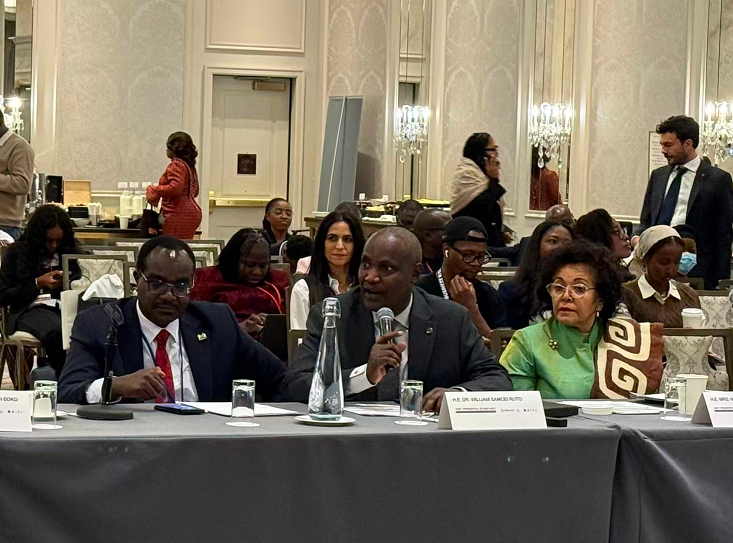
Nardos Bekele-Thomas poses for a group photo with participants of the meeting
This year marks the 70th anniversary of the establishment of diplomatic relations between China and African countries, as well as the China-Africa Year of People-to-People and Cultural Exchange, jointly designated by leaders of both sides. During the session, the AUDA-NEPAD and the ICC announced the establishment of a long-term coordination and cooperation mechanism aimed at building a strategic, high-level framework for development cooperation. The two sides will conduct high-level dialogue and consultations, carry out research on strategic issues, and continuously advance the alignment of development strategies and all-round cooperation between China and Africa. As a key institution of the African Union spearheading strategic planning and project delivery in Africa’s integration process, AUDA-NEPAD plays a pivotal role in advancing continental development initiatives. As a comprehensive Chinese institution dedicated to international studies and policy coordination, the ICC has long focused on major issues concerning China-Africa development cooperation under the framework of South-South cooperation. Amid profound shifts in the global landscape and accelerated development across the African continent, the two sides are committed to making greater contributions to advancing international cooperation and boosting global economic growth.
相关链接
 国际合作中心版权所有 © 京ICP备2022021348号-2
©2006 - 2026 Copyright International Cooperation Center
网站版权登记号:国作登字-2022-F-10176092
E-mail:info@icc.org.cn