
Director of the UNESCO Regional Office for East Asia Prof. Shahbaz Khan Delivers Video Address at International Taijiquan Symposium Marking Inaugural International Taijiquan Day
The international symposium on Taijiquan was held here at the Conference Center of the National People’s Congress on 20 March 2026 to celebrate the first-ever International Taijiquan Day. The event was hosted by the Editorial Board of the “Blue Book of World Taichi”, under the guidance of the International Cooperation Center (ICC) and the China Institute of Science and Technology Evaluation (CISTE). The symposium aimed to showcase Chinese Taijiquan to the world through international exchanges and discussions, so as to better promote its global dissemination and communication, and enhance its international influence. Li Minrong, Deputy Director of the Editorial Board of the “Blue Book of World Taichi”, delivered a speech on behalf of the organizer. He noted that from an oriental treasure to an international celebration, the light of Taiji illuminates the path of mutual learning among civilizations. He proposed giving full play to the "bridge-building" role of the think-tanks, empowering Taijiquan with technology and international exchanges to compose a new chapter in its internationalization. He also called for joint efforts to draw a blueprint for human health and build a community with a shared future for mankind by following the philosophy of Taiji. Professor Shahbaz Khan, Director of the UNESCO Regional Office for East Asia delivered a video address to the symposium.
In his address, Professor Khan extended his sincere gratitude, on behalf of UNESCO and its Regional Office for East Asia, to the Editorial Board of the “Blue Book of World Taichi”, the ICC, and the CISTE, and all partners who contributed to the organization of this significant event. Over the centuries, Taijiquan has evolved into a rich system encompassing major styles such as Chen, Yang, Wu, and Sun. Today, hundreds of millions of people across more than 180 countries and regions practice Taijiquan. Its growing international influence shows that Taijiquan is not only a traditional Chinese martial art, but also a shared cultural heritage transcending national borders and cultures. He stated that UNESCO highly values the protection of living cultural traditions that foster social cohesion, enhance well-being and promote intercultural dialogue. In 2020, Taijiquan was inscribed on the Representative List of the Intangible Cultural Heritage of Humanity by UNESCO, recognizing its cultural value and vital role in promoting health, physical and mental balance, and community life.
Related Link:
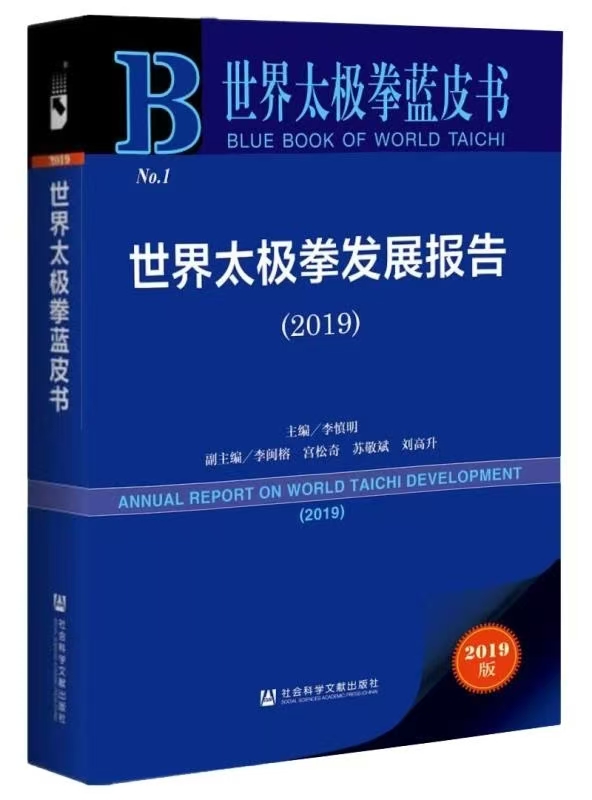
Taijiquan originated in China, integrating elements of philosophy, traditional Chinese medicine and martial arts. It is based on the theory of "balance of yin and yang, combining hardness and softness", and has evolved over several hundred years to form various styles of Taichi techniques such as Chen, Yang, Wu, Wu and Sun. Under the coordination and promotion of the Blue Book Committee of the "Report om World Taichi Development ", on December 17, 2020, this project was included in the UNESCO "Representative List of the Intangible Cultural Heritage of Humanity". In August 2023, at the "2023 All-Staff Tai Chi Conference" jointly hosted by the Blue Book Committee of the "Blue Book of World TaiChi ", the experts jointly proposed an initiative: to designate the vernal equinox, when day and night are equal and cold and hot are balanced, as the "International TaiChi Day", symbolizing the continuous existence of humanity and the pursuit of peace and harmony. In January 2024, the Blue Book Committee of the "Blue Book World of TaiChi " officially submitted a proposal in the capacity of a think tank suggestion to the central government, stating "It is recommended that the Chinese government submit an application to the UNESCO organization to establish the 'International TaiChi Day' every year on the vernal equinox."
On November 5, 2025, the 43rd session of the UNESCO General Conference officially adopted a resolution in Samarkand, Uzbekistan, designating March 21st (the Vernal Equinox Day in the Northern Hemisphere) as the "International Taijiquan Day". This is the first international day named after a martial art project in the United Nations system, marking the global recognition of the core values of Taijiquan and serving as a vivid practice of the global civilization initiative. Establishing the "International Taijiquan Day" is a significant and far-reaching decision by UNESCO, which is of great importance for enhancing human health and well-being, promoting cultural exchanges and mutual learning, and promoting world peace and development. Currently, Taijiquan has spread to 180 countries and regions, with hundreds of millions of enthusiasts, and has become an important force connecting cultural exchanges between China and the world and promoting human health and well-being.
 国际合作中心版权所有 © 京ICP备2022021348号-2
©2006 - 2026 Copyright International Cooperation Center
网站版权登记号:国作登字-2022-F-10176092
E-mail:info@icc.org.cn