
Reconstruction of Order in the Eurasian Region and the Special Role of the Shanghai Cooperation Organization
With the acceleration of the expansion process, the SCO (short for "Shanghai Cooperation Organization") has expanded its coverage to a vast Eurasian space. The power structure in this region has undergone significant changes since the end of the Cold War, presenting instability and uncertainty. What kind of order can a region form depends on the effectiveness of governance and the power structure and system formed on the basis of governance. The new cooperative concept advocated by the SCO goes beyond traditional international relations thinking and has created a new type of multilateral cooperation model. The SCO actively participates in improving regional governance and is playing an increasingly important and unique role in reshaping the order in the Eurasian region.
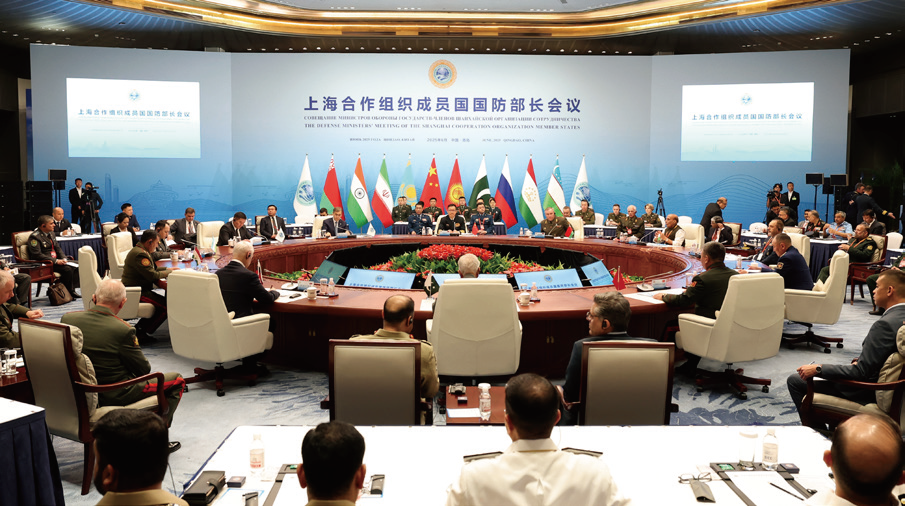
On June 26, 2025, the meeting of defense ministers of the member states of the SCO was held in Qingdao.
The changing order in the Eurasian region
Since the 1990s, a series of changes have taken place in the Eurasian region where the Shanghai Cooperation Organization is located. On one hand, with the end of the bipolar confrontation during the Cold War, the regional countries have gained opportunities for independent development. On the other hand, cooperation in the Eurasian region has encountered numerous problems, and various conflicts and disputes have erupted continuously under special circumstances. Some major powers outside the region have been engaging in mutual games in the new regional order, attempting to play more significant roles. The order in the Eurasian region presents characteristics of instability and uncertainty. Forming political and security consensus, addressing various practical challenges, and eliminating risks of geopolitical games are necessary conditions for stabilizing the regional order, and establishing effective multilateral mechanisms is the necessary path to achieve this goal.
I. The Necessity of Political and Security Cooperation
The Eurasian region where the SCO is located witnessed armed conflicts and military confrontations during the Cold War. After the end of the Cold War, non-traditional security issues such as extremism, terrorism, separatism, and cross-border criminal activities emerged. The countries in the region generally faced severe security challenges and hoped to achieve neighborly cooperation by resolving historical issues and establish a cross-border military mutual trust mechanism. the SCO was born under such circumstances. It expanded from resolving military mutual trust and border disarmament issues in the border areas through the "Shanghai Five" mechanism to other fields, and its multilateral cooperation scope became more extensive. Member states actively promoted high-level consultations and established multi-field meetings and coordination mechanisms, making the SCO gradually become a regional organization that not only promotes border and peace stability but also promotes economic and trade cooperation and friendly relations between the people. Achieving security and political mutual trust and establishing and developing friendly relations with neighbors are important foundations and initial conditions for the growth of the SCO. This is clearly stated in the "Declaration on the Establishment of the Shanghai Cooperation Organization": "Each member state will strictly abide by the purposes and principles of the UN Charter, respect the independence, sovereignty and territorial integrity of each other, refrain from interfering in each other's internal affairs, refrain from using or threatening to use force, be equal and mutually beneficial, and resolve all issues through mutual consultation. It will not seek unilateral military superiority in the adjacent areas."
The security cooperation between China and Russia, as well as with Central Asian countries, has made rapid progress within the framework of the the SCO. From signing legal documents such as the "Shanghai Convention on Combating Terrorism, Separatism and Extremism", the "Shanghai Cooperation Organization Anti-Terrorism Convention", the "Shanghai Cooperation Organization Anti-Extremism Convention", and the "Shanghai Cooperation Organization Treaty on Long-Term Good-Neighborly Friendship and Cooperation", to establishing a permanent regional anti-terrorism agency in Tashkent, from anti-drug cooperation to joint law enforcement, from training and exchange to conducting joint anti-terrorism exercises, the scope of cooperation has gradually expanded, the level of cooperation has continuously improved, and a series of important achievements have been made. In the face of the new changes in the international landscape, the SCO has played an important role as a regional mechanism: maintaining regional peace and security, coordinating relations among major powers, eliminating potential crisis risks; participating in the creation of international systems, establishing a complete set of international cooperation mechanisms, implementing the agreements, rules and procedures reached by all parties through the establishment of new organizational structures; providing a multilateral diplomatic platform, providing an institutional framework for multilateral negotiations, creating a cooperative atmosphere through "conference diplomacy"; promoting the further development of international law and establishing normal order in a complex region. The political foundation of the SCO is solid. It not only has the functions of a general international organization but also can undertake more responsibilities and play a more important role. The SCO starts with military security mutual trust and aims for comprehensive cooperation, proposing a new security concept, which provides a guarantee for its greater role in reshaping regional order.
II. The Complexity of Reconstructing the Order in the Eurasian Region
For the Eurasian region, establishing a stable political and economic order is fraught with difficulties. Russia once attempted to establish a regional system under its own leadership, but encountered significant resistance. In the 1990s, the security situation in the post-Soviet space was severe, with rampant terrorist activities in the North Caucasus region of Russia, and the illegal armed forces of Chechnya openly opposing the central government of Russia; Central Asian countries were affected by the Afghan war, and in 1996, the Taliban armed forces captured the capital Kabul and advanced towards the northern border, and Afghan extremists began to infiltrate Central Asia; Transnational criminal activities such as drug smuggling plagued regional stability; Azerbaijan and Armenia although reached a ceasefire, failed to achieve true peace. On May 15, 1992, the heads of state of Russia, Kazakhstan, Uzbekistan, Tajikistan, Armenia and Kyrgyzstan signed the Collective Security Treaty. In 2002, the Collective Security Treaty Organization was officially established, and the security order in the Eurasian region under the leadership of Russia gradually took shape. With the disintegration of the ruble zone in 1993, the economic ties between the newly independent countries and Russia's original ones were interrupted, and they generally fell into a serious crisis. The regional economic order needed to be rebuilt, but the regional security order remained relatively stable.
Since the 21st century, the construction of the order in the Eurasian region has taken two different paths: One is the multilateral organization and integration process led by Russia, which started earlier and covered a wide range of areas, but was constrained by the decline of Russia's power and faced many practical difficulties; the other is the "de-Russification" or "pro-Western" sub-regional cooperation, aiming to strengthen the independent status of nation-states, but it is difficult to achieve the goal smoothly in the short term. After Putin came to power, Russia pursued a strong foreign policy, emphasizing leading the regional political, economic and security processes within the framework of the region it dominated. At the same time, Russia persuaded the Central Asian Cooperation Organization to join the Eurasian Economic Community led by it, and also promoted some Eurasian countries to sign the "Treaty on the Free Trade Area of Commonwealth of Independent States". However, Russia was limited by traditional thinking and practices, it was unable to adapt to the new changes in regional situations. Its attempts to independently build a regional governance system were hindered by various factors. Western countries exploited so-called "democratization transformation", "Afghanistan counter-terrorism" and "color revolution" in the Eurasian region to stir up trouble. Ukraine, Georgia and other neighboring countries of Russia took a firm anti-Russian path. The United States and NATO gained military presence in Central Asia region for a time, and Western NGOs took root in Eurasian countries, making Russia truly feel threatened and pressured. The changes in the order of the Eurasian region during this period were conducive to enhancing the autonomy of regional countries, but the escalation of the geopolitical game among major powers made it difficult for these countries to truly obtain broad development space.
III. Geopolitical Competition and the Development of Multilateral Mechanisms
During the process of order transformation in the Eurasian region, various multilateral mechanisms and cooperation frameworks led by different major powers have emerged continuously. They compete with each other and even confront each other head-on. The important multilateral frameworks include: the Eurasian Economic Union and the Collective Security Treaty Organization led by Russia, the "Gauam" group which is close to Europe and has a distinct anti-Russian stance, and multiple "C5+1" meeting mechanisms established by different major powers and Central Asian countries. Russia attempts to form the most favorable multilateral cooperation system for itself through the "Greater Eurasian Partnership"; after the United States withdrew its troops from Afghanistan, it tried to maintain its presence in Central Asia and re-strategize; India, Japan, Turkey, Iran, and even Poland are conducting local infiltration in the Eurasian region, hoping to strengthen their regional influence; under the backdrop of the Ukraine crisis, the confrontation between Russia and Western countries in the Eurasian region has continued to escalate, and the geopolitical competition has become increasingly intense.
Due to the failure to establish a stable order, the governance deficit in the Eurasian region is particularly prominent. Firstly, the regional institutional arrangements are rather chaotic, with various mechanisms being complex and ineffective, and the action capabilities being weak. Secondly, there are no common rules to abide by. Major powers aim to achieve their strategic interests, while smaller countries have their own different demands. The various differences and contradictions are extremely sharp. Finally, the Eurasian countries cannot become the true main body of regional governance. In various multilateral cooperation, they often find themselves in a passive or subordinate position. Under such circumstances, the SCO has become a driver for establishing a new governance system in the Eurasian region. It constantly innovates its cooperation concepts, adjusts its cooperation goals according to regional realities, and adheres to the principles of non-alignment, not targeting other countries and regions, and openness. Member states have fully communicated on regional issues, supported each other on the international stage, and the levels of cooperation have become increasingly diverse. The cooperation concepts and methods of the SCO have been widely welcomed, and more and more regional countries hope to join its cooperation process.
The advantages and roles of the SCO in promoting the reshaping of the order in the Eurasian region
As a new regional cooperation mechanism, the SCO not only provides a platform for political and security consultations, but also focuses on the long-term stability and common development of the region. The countries in the Eurasian region have close social and cultural ties, and regional cooperation enjoys geographical, institutional and economic complementary advantages. By leveraging these advantages, the SCO has played an important role in reshaping the regional order, forming a relatively stable strategic interaction relationship among member states, and creating a new governance paradigm for the region.
I. The advantages of the SCO in participating in regional security governance
The SCO has numerous advantages for participating in the governance of the Eurasian region. The member states are geographically close to each other, and they have a high degree of interdependence or interconnection in politics, economy, security and culture. They often face the same or similar internal and external challenges. Through establishing formal or informal mechanisms, the SCO seeks consensus and common arrangements to solve problems, establishes a cooperation framework that all parties can accept, coordinates relations among member states, eliminates the risks of conflicts and confrontations, jointly combats the "three forces" that threaten regional stability and transnational crimes, and maintains long-term stability in the region.
The SCO has unique advantages in regional security governance. The member states can be geographically connected as a whole, which provides the necessary conditions for regional cooperation. The member states border each other and have close historical and cultural ties, which naturally fosters a sense of closeness and group consciousness, facilitating extensive and diverse regional cooperation. At the same time, influenced by the geopolitical games of major powers and the extremism of ethnic and religious issues, the member states share similar or identical security interests. Although some Eurasian countries find it difficult to accept the "transfer of sovereignty" and the establishment of supranational institutions, they welcome the SCO to play a greater role in the region. Through this important platform, member states can enhance mutual trust, resolve differences through dialogue, form a stable relationship of mutual dependence and common development, promote multilateral cooperation through high-level bilateral relations, determine common-recognized rules and institutional frameworks, and lay a solid legal foundation for multilateral cooperation.
II. Advocate regionalization based on the principle of open and win-win cooperation
The SCO was established at the backdrop of rapid global development, actively promoting regional economic cooperation based on mutual benefit and reciprocity. Due to the fact that a few Western countries currently pursue protectionist trade policies and "closed borders" and other narrow-minded policies, the world economic order formed after World War II has been constantly under threat. Some functions of international organizations such as the World Trade Organization have faced suspension. At the same time, the consensus among emerging market countries and developing countries to unite and strengthen themselves has gradually increased, and non-Western regional and multilateral cooperation has gained stronger development momentum. the SCO has become one of the important representatives of the Global South and has played a demonstration role in implementing major global initiatives.
In the United States, where the Trump administration has exploited tariffs and seriously disrupted the existing international economic order, the SCO advocates maintaining the authority of the multilateral trading system and playing the core role of the WTO. The SCO promotes the facilitation of trade and investment in multilateral economic cooperation, strives to eliminate artificial obstacles, and promotes regional connectivity, aiming to create a mutually beneficial and inclusive regional economic order. As most member states have relatively simple economic structures, relying mainly on resource production and export as pillars, they need to overcome their disadvantages in the international economic landscape through regional cooperation. The regionalization advocated by the SCO is based on the principle of openness and win-win, actively expanding economic and trade exchanges among countries, and enhancing economic ties among regional countries. For example, in 2024, China's imports and exports to other SCO member states reached 3.65 trillion yuan, which was 36.3 times that of the initial establishment.
III. Establishing a New Paradigm for Multilateral Cooperation and Regional Governance
Establishing a regional order that is recognized by all parties in a vast area with a large population and diverse cultures is undoubtedly a challenging task. the SCO has set ambitious goals and long-term plans. Over the past 24 years, it has actively advocated resolving conflicts through dialogue and consultation, establishing strong partnerships among regional countries, starting from addressing common issues, and has steadily enhanced its appeal and influence.
The SCO takes into account the long-term interests of the region and its member states, maintaining the continuity and stability of multilateral cooperation. The regional countries have benefited universally and achieved common development. The SCO has put the formulation of long-term development plans on its agenda. The 2012 Beijing Summit adopted the "Mid-Term Development Strategy Plan of the Shanghai Cooperation Organization", and the 2015 Ufa Summit adopted the "Development Strategy of the Shanghai Cooperation Organization until 2025". Due to the complex and changing international and regional situations, and the less stable relations among some member states, the process of promoting the shaping of a stable Eurasian order by the SCO is often disrupted by internal and external factors. This process is difficult and lengthy. As emphasized in the 2024 "Astana Declaration of the SCO Heads of State Council", "The world political and economic situation is undergoing major changes. The international system is moving towards greater fairness and multipolarity, providing more opportunities for the development of all countries and equal and mutually beneficial international cooperation. At the same time, the rise of power politics, the escalation of acts that violate international law norms, the intensification of geopolitical confrontation and conflicts, and the risks to global and SCO region stability are increasing." In the process of promoting cooperation in various fields, the SCO does not insist that member states maintain complete consistency in domestic and foreign policies. Instead, it actively conducts extensive cultural exchanges to enhance friendly sentiments among the people and strives to seek the greatest common denominator of cooperation in practice.
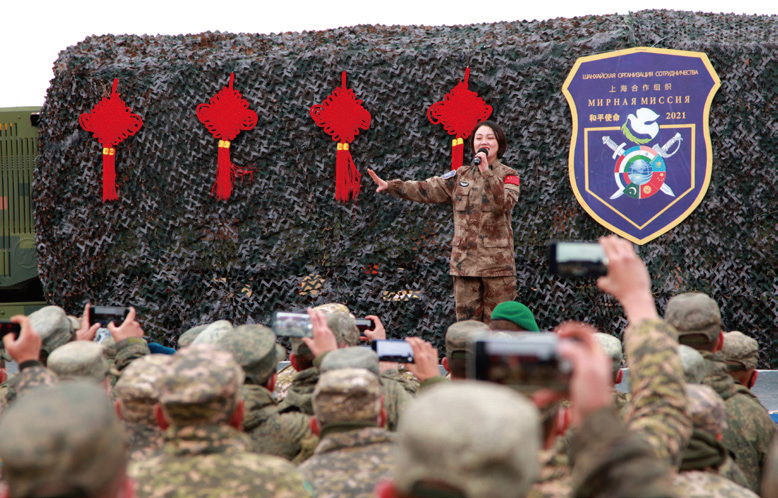
On September 17, 2021, the Chinese participating troops of the "Peace Mission-2021" joint anti-terrorism military exercise of the SCO held the "Chinese Culture Day" event at the Dongguz Target Range in Orenburg Region of Russia. (Photo by China News Service)
The Mission of the SCO in the Era and the Prospects of the Order in the Eurasian Region
As the world enters a new period of turmoil and transformation, global governance is confronted with a series of new issues and challenges. Emerging market countries and developing countries have a stronger desire to promote the international order towards a more just and reasonable direction. They oppose the control of global wealth and rule-making power by a few developed countries and hope to narrow the North-South gap as soon as possible. the SCO has put forward clear propositions on global issues and regional issues, adhering to the principle of openness to the outside world, and cooperating with other international organizations to build a broad network of partnerships. With the acceleration of the expansion process, the SCO's geographical coverage has extended to South Asia, West Asia and Eastern Europe, becoming the largest regional cooperation organization in terms of area, population and economic potential in the world. After the Global Development Initiative, the Global Security Initiative and the Global Civilization Initiative, at the Tianjin Summit of the SCO in 2025, China proposed the Global Governance Initiative. In the future, the SCO will play a more constructive role in reshaping the Eurasian order and global governance.
1. Establish new concepts and norms for cooperation
The reason why the SCO enjoys wide popularity is that it can promptly address the real challenges faced by regional countries through necessary support and assistance. For instance, in response to the international financial crisis in 2008 and the public health crisis caused by the COVID-19 pandemic in 2020, the member states of the SCO supported each other and overcame difficulties together. China provided practical assistance to other member states, embodying the cooperative concept of good-neighborliness, mutual benefit, and win-win results. In response to the impact of the international financial crisis, the Yekaterinburg Summit of the SCO in 2009 proposed that member states would work together with the international community to establish a fairer, more just, more inclusive, more orderly, and one that takes into account the interests of all parties, and enables globalization to benefit all countries. At the same time, it encouraged strengthening cooperation and information exchange on international financial issues and responding to the international financial crisis within the SCO region.
The SCO shares similarities with other regional multilateral mechanisms. Both are inter-governmental cooperation based on multilateral agreements, launching multiple meeting mechanisms, and promoting economic, security, political, and cultural cooperation. However, they also take a unique approach, emphasizing partnership rather than alliance, and not targeting any third party. They are united by geographical, historical, economic, and cultural ties, collaborating and sharing responsibilities, and developing a close cooperative relationship aimed at building a regional community of shared destiny. From the perspectives of development, security, cooperation, civilization, to global governance, China, based on the practice of the SCO, continuously proposes new concepts, transcending traditional international relations thinking. It neither forgets its original mission nor lags behind the times, constantly adding new contemporary connotations to the "Shanghai Spirit".
II. Actively Promote the Construction of a Community with a Shared Future for Mankind
At the 2018 Qingdao Summit of the SCO, President Xi Jinping first proposed the establishment of a Shanghai Cooperation Organization community with a shared future. "Establishing the common concept of building a community of shared future for mankind" was written into the Qingdao Declaration. At the 2022 Samarkand Summit of the SCO, the President Xi Jinping emphasized the implementation of the concept of a community with a shared future, adding new impetus to friendly cooperation among neighboring countries, firmly maintaining the international system centered on the United Nations and the international order based on international law, promoting common values for all humanity, and rejecting zero-sum games and group politics. At the 2024 Astana Summit of "Shanghai Cooperation Organization+" with Astana as the venue, President Xi Jinping proposed the construction of a "common home" characterized by unity and trust, peace and tranquility, prosperity and development, good neighborly relations, fairness and justice. This series of important initiatives have provided crucial ideological support for the construction of a community with a shared future for mankind.
At the "Shanghai Cooperation Organization+" conference in 2025, President Xi Jinping proposed the Global Governance Initiative. This indicates that the SCO should assume a leading role, contribute the "SCO strength" to maintaining world peace and stability, demonstrate the "SCO responsibility" in promoting global openness and cooperation, set an example in promoting universal values shared by all humanity, take actions to safeguard international fairness and justice, and act as a role model in practicing global governance initiatives. To build a community with a shared future for mankind, all countries need to be interdependent, trust each other, promote each other, and be inclusive. When pursuing their own interests, they should also take into account the reasonable concerns of other countries; when seeking their own development, they should also drive the development of other countries. The global governance initiative discards the logic of power and advocates common development, common governance, and common benefits. It is in line with the concept of building a community with a shared future for mankind and has contributed Chinese wisdom and solutions to addressing the urgent problems of the current world. It has also clarified the direction for the SCO to promote the establishment of a fair and reasonable governance system in the Eurasian region.
III. Strive to Practice True Multilateralism
The traditional regional cooperation model is unable to meet the development needs of the SCO. The geographical environment of the member states' regions is complex. With the launch of the expansion process, the cooperation area gradually expands, and the problems to be solved are increasing, while the cost of policy coordination is also rising. This inevitably affects the efficiency of cooperation and the unity of member states. the SCO also faces increasing pressure from international institutional competition. There are more and more multilateral mechanisms and frameworks both within and outside the region, and more and more major countries are involved in regional affairs, each with their own cooperation plans and increased investment intensity. the SCO needs to assess the situation and propose more creative and promising initiatives. At the same time, it needs to form a good interaction relationship with the United Nations and other multilateral mechanisms to promote the strategic planning alignment and cooperation among the member states and partners of the SCO under the framework of the "Belt and Road Initiative".
As the Ukraine crisis drags on, the confrontation between Russia and the Western powers has intensified. Energy crises, food crises, arms races, nuclear security issues, and other problems have become increasingly serious. Local conflicts and regional hotspots have become more difficult to control. The geopolitical situation in the Eurasian region has become more complex. the SCO explicitly opposes camp, pan-safetyism and unilateral sanctions. It aims to make the "cake" of mutually beneficial cooperation larger and make economic and trade cooperation and regional governance more solid. The SCO Tianjin Summit adopted the "SCO Strategic Vision for the Next 10 Years (2026-2035)", which clarified the key directions and priority areas of future cooperation, and emphasized the need for mechanism reform, the establishment of more regional cooperation centers and platforms, and the further enhancement of the SCO's attractiveness in the region. For instance, Armenia's withdrawal from the Collective Security Treaty Organization (CSTO) led by Russia and its active pursuit of joining the SCO were precisely due to seeing the huge potential of this new mechanism. With the "Shanghai Cooperation Organization+" cooperation approach gaining wide recognition, the partnership network of the SCO has gradually expanded. This truly reflects the openness and representativeness of its cooperation, and more and more countries from the Global South have participated, which is conducive to promoting the creation of a more efficient governance platform. (Author: Sun Zhuangzhi, Director and Researcher of the Institute of Russia, Eastern Europe and Central Asia, Chinese Academy of Social Sciences)
(AI Translation)
 国际合作中心版权所有 © 京ICP备2022021348号-2
©2006 - 2026 Copyright International Cooperation Center
网站版权登记号:国作登字-2022-F-10176092
E-mail:info@icc.org.cn