
The Role and Function of the International Monetary Fund in International Financial Governance
The international financial order is an important part of the post-war international order. Before the end of World War II, the international community had realized the need to establish a new financial order to stabilize the global economy. The establishment of the Bretton Woods system marked the initial formation of the post-war international financial governance framework. Although the Bretton Woods system was declared dissolved in 1971, the International Monetary Fund (IMF) and the World Bank established under this system have continued to exist and have played a significant role in international financial governance. Among them, the IMF has been of great significance in maintaining post-war financial stability. With the profound changes in the international economic landscape, the IMF still needs continuous reform. Its three major missions - promoting international monetary cooperation, supporting trade and economic growth, and avoiding policies that harm economic prosperity - still have profound significance in today's global financial governance.
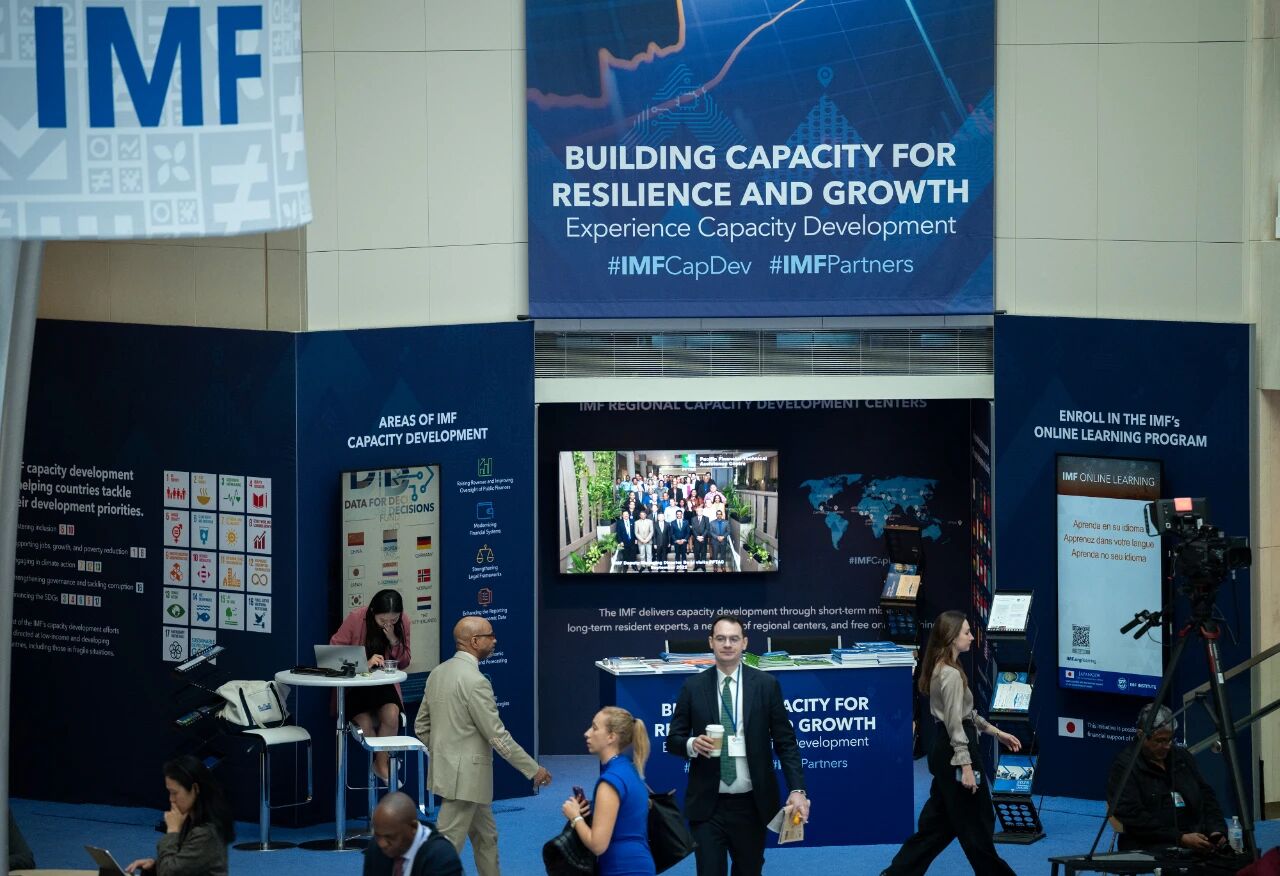
On April 23, 2025, the International Monetary Fund stated that it expects the increase in US tariffs in 2025 to cause the global public debt as a percentage of GDP to rise by 2.8 percentage points, reaching 95.1% of GDP.
Changes in the Functions and Roles of the IMF
In order to rebuild the post-war international economic order, in 1944, representatives from 44 countries gathered in Bretton Woods, New Hampshire, USA for the United Nations Monetary and Financial Conference (Bretton Woods Conference). This conference adopted the "White Plan" as the basis to formulate the "Final Resolution of the United Nations Monetary and Financial Conference", as well as the "International Monetary Fund Agreement" and the "International Bank for Reconstruction and Development Agreement", establishing a dollar-centered international monetary system (Bretton Woods System), and simultaneously establishing two major international financial institutions, the IMF and the International Bank for Reconstruction and Development (World Bank).
The core of the Bretton Woods system was the "dual peg" system, where the US dollar was pegged to gold and other currencies were pegged to the US dollar. This arrangement aimed to stabilize exchange rates and prevent trade frictions and economic instability among countries due to exchange rate fluctuations, creating favorable conditions for international trade and economic recovery. After its establishment, the IMF clearly defined its three main missions: promoting international monetary cooperation, supporting trade and economic growth, and avoiding policies that undermine economic prosperity. These three missions have continued to this day. The quota is the cornerstone of the IMF's capital structure and governance structure. The main source of the IMF's funds is the quotas contributed by member countries. The quotas of member countries determine the maximum amount they can contribute to the IMF and their voting rights, and also affect the limit of regular loans they can obtain from the IMF. The IMF's Board of Governors conducts a total quota review at least every five years to determine the overall scale of capital increase and the distribution of the increase among member countries.
During the Bretton Woods system era, the IMF effectively maintained the stability of the international monetary system by supervising exchange rate policies and providing short-term financial support. It promoted international trade and economic recovery. The buffer mechanism it offered to member countries to deal with international balance of payments imbalances prevented trade frictions and economic instability caused by exchange rate fluctuations.
In the 1960s and 1970s, the Bretton Woods system gradually faced challenges. As the economic status of the United States declined relatively, the pressure on the balance of payments of the US dollar increased, and the limitations of the IMF in maintaining the fixed exchange rate system gradually became apparent. In 1971, US President Nixon announced the suspension of the conversion of the US dollar to gold, which marked the disintegration of the Bretton Woods system.
After the disintegration of the Bretton Woods system, two major impacts emerged in international financial governance. Firstly, the diversification of exchange rate systems, with each country freely choosing its own exchange rate regime, leading to an overall shift from fixed exchange rates to floating exchange rates. After the collapse of the Bretton Woods system, through five years of international coordination and communication, IMF member countries signed the Jamaica Agreement in 1976, which legalized the floating exchange rate system. The international monetary system based on the Jamaica Agreement is known as the "Jamaica System" or the "post-Bretton Woods System". In the era of floating exchange rates, the problems faced by countries were quite different from those in the era of fixed exchange rates. As exchange rate fluctuations intensified, the risks in international trade and investment rose. In response to this change, the IMF shifted from focusing on maintaining the fixed exchange rate system during the Bretton Woods era to supervising the flexibility and stability of member countries' exchange rate policies, and forming the rudiments of a subsequent consultation mechanism. Secondly, under the impact of the oil crisis, on the one hand, oil-importing countries faced current account deficits and rising inflation; on the other hand, some commercial banks became sovereign bondholders, increasing their lending to developing economies, especially those in Latin America, based on the increase in oil dollar profits of oil-producing countries, leading to a rapid accumulation of debt in countries that relied heavily on private sector loans, resulting in severe debt crises. To address the current account deficits and inflation problems caused by the oil crisis for oil-importing countries, the IMF created lending tools and provided concessional loans to low-income countries to address international balance of payments issues, forming adjustment tools. After the emergence of debt crises in developing countries, the IMF began crisis coordination work, starting from responding to the Mexican crisis in 1982 and continuing throughout the Latin American debt crisis period. It was also during this period that the role of the IMF as a global crisis manager and ultimate lender was established.
However, during the Latin American debt crisis, the IMF also revealed some shortcomings in fulfilling its functions. What particularly drew criticism from the international community was that the loan conditions set by the IMF were overly stringent. They demanded that countries in crisis undertake overly radical market-oriented reforms and implement austerity fiscal policies, which to some extent exacerbated the economic hardships and social discontent in these crisis-stricken countries.
The Impact of the New Era and the Reform of the IMF
In the late 1990s, the Asian financial crisis exposed the problems existing in international financial governance, particularly the overly strict bailout conditions and the excessive promotion of capital account liberalization. After the Asian financial crisis, with the IMF reform as the main thread, international financial governance underwent a comprehensive adjustment: The IMF placed greater emphasis on the stability of the financial sector, particularly focusing on its impact and transmission on macroeconomic stability, and launched the financial sector assessment program; the attitude towards capital account liberalization was adjusted. Previously, the IMF had a high pursuit for capital account liberalization, but through this crisis, it gained a deeper understanding of the sequence of capital account opening. Under the condition of a weak financial foundation, it advocated that capital account opening should not be carried out rashly. Subsequently, the IMF's prudence regarding capital account opening continued to increase; it also reflected on the structural adjustment requirements during crisis rescue, and adjusted the bailout conditions that required crisis countries to implement fiscal austerity during the crisis.
However, the international financial crisis that originated from the subprime mortgage crisis in the United States in 2008 once again exposed the flaws of the IMF in terms of risk warning and supervision, governance structure and action capability. Therefore, the IMF carried out significant reforms, mainly manifested in capital increase and enhancing the representation of developing economies. In terms of capital increase and improving lending tools, the IMF enhanced its lending capacity and made the lending tools more flexible. The lending capacity of the IMF increased significantly from the pre-crisis level to 750 billion US dollars, and the lending tools became more diverse and flexible. In terms of enhancing the representation of developing economies, the IMF also took actions. The quota reform in 2010 gave developing economies more quotas, and the RMB officially became a currency in the Special Drawing Rights (SDR) basket in 2016.
After the outbreak of the COVID-19 pandemic, the IMF promptly enhanced its lending capacity and increased the total share. Based on the original lending capacity based on subscribed shares, the IMF signed new borrowing arrangements (NAB) and bilateral borrowing agreements (BBA) with some member states and institutions, forming a loan resource framework of "shares - NAB - BBA". In the 16th total share review completed in December 2023, the IMF raised the total share by 50% at one time, adding approximately 239 billion SDRs (320 billion US dollars), raising the permanent resources to 719 billion SDRs. This is the first substantive increase in resources since 2010.
From the exchange rate supervision and short-term financial support during the Bretton Woods era, to the crisis coordination and structural adjustment in the post-Bretton Woods era, to the changes in crisis rescue conditions, capital increase and loan instrument reforms in the new era, as well as the enhanced loan capacity and loan support during the pandemic, the IMF has played a significant role in maintaining global financial stability.
The representation of emerging markets and developing countries should be further enhanced
Over the past 80 years, due to the significant participation of emerging markets and developing countries, the number of IMF member countries has grown from the initial 29 to the current 191. Although the economic strength and growth potential of emerging markets and developing countries have significantly increased, their representativeness has been underestimated. The current share structure of the IMF fails to meet the needs of member economies for maintaining international balance of payments and financial stability. Although the 2010 share rights reform increased the representation of developing countries, the shares have not been adjusted in the past decade, and the share of developing countries in the current IMF remains relatively low. Further adjustment of the IMF's share ratio is a key part of improving the governance structure of the IMF. Currently, the IMF has initiated its 17th overall share check and will propose a new share formula as an important task. In the future, when the IMF adjusts its shares, it should continue to increase the shares of emerging markets and developing countries and enhance the representativeness of the IMF.
Furthermore, establishing a more stable monetary system is also an important aspect that the IMF needs to focus on in the future. After Trump returned to power, the uncertainty of his policies exacerbated investors' concerns about the security of the US dollar, posing a potential threat to the healthy operation of the global financial system and the stability of the international monetary system. Therefore, exploring the establishment of a more stable international monetary system should be regarded as the backdrop for the IMF's future reforms. To this end, on the basis of enhancing the voice and representation of emerging markets and developing economies, the IMF can consider expanding the use of SDRs and enhancing their position in the international reserve currency system; better exerting the supervisory function of the IMF, supporting multilateral and bilateral financial cooperation among countries, in order to establish a more effective international financial regulatory coordination mechanism and jointly address global financial risks. (Author: Yang Panpan, Director of the International Finance Research Office, Institute of World Economics and Politics, CASS)
 国际合作中心版权所有 © 京ICP备2022021348号-2
©2006 - 2026 Copyright International Cooperation Center
网站版权登记号:国作登字-2022-F-10176092
E-mail:info@icc.org.cn